2026 Data Centric Summit
10.01.26

The CODE Building Irving Theatre
225 West Water St, Charlottesville, VA 22902

Data
_
AIML
_
Analytics
_
Mission Systems
_
Infrastructure
_
Governance
_
Cybersecurity
_
Data _ AIML _ Analytics _ Mission Systems _ Infrastructure _ Governance _ Cybersecurity _
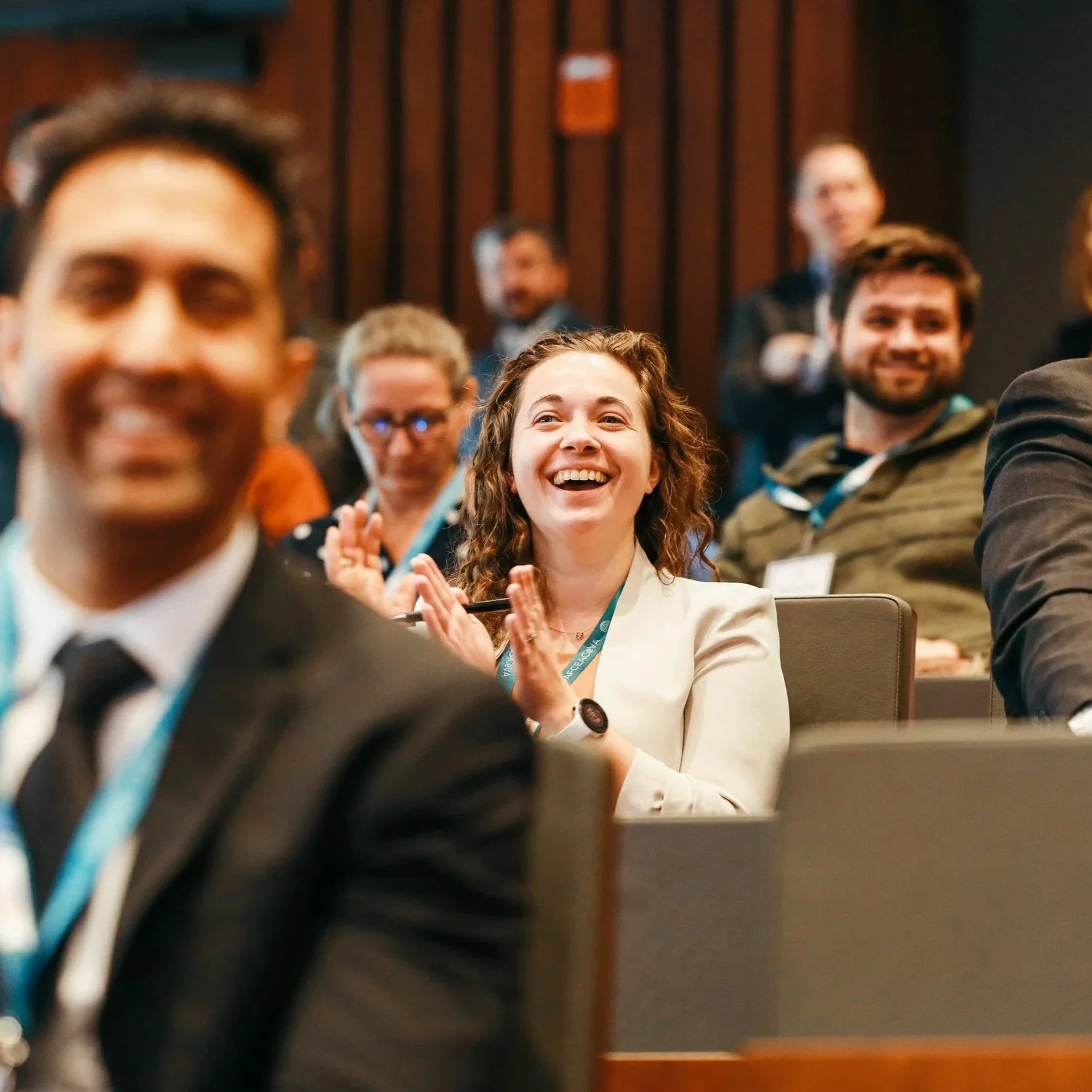
The AFCEA Central Virginia (CeVA) Data Centric Summit returns in 2026 with a renewed focus on the technologies, architectures, and operational practices shaping the next generation of data‑driven decision-making across defense, government, and industry. This year’s summit brings together leaders, practitioners, and innovators to explore how data can be transformed into actionable intelligence—securely, efficiently, and at scale.
Whether you work in cybersecurity, analytics, AI/ML, mission systems, infrastructure, or public-sector governance, the 2026 Summit offers a unique opportunity to connect with experts and peers who are redefining what it means to be data‑centric in complex operational environments.
Join us as we examine emerging standards, real‑world use cases, and cross‑sector collaboration models that are accelerating digital transformation. Secure your spot early and be part of a community committed to advancing data‑centric thinking across the Commonwealth and beyond.
-
Stop by the AFCEA table to pick up your name badge.
-
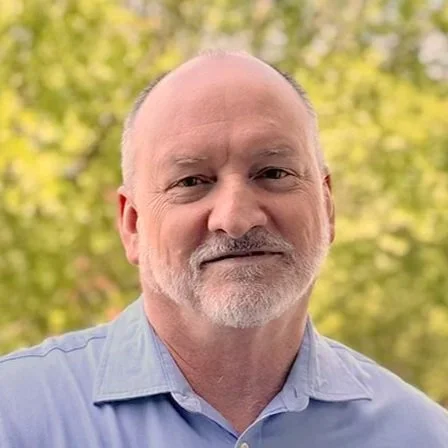
Alan Johnson is the VP of Strategic Development for GA-i3
Don’t Stop Me Now: Running Fast with Scissors in the Age of AI
AI is accelerating how we build software, analyze data, and deliver value—and challenging how organizations operate. At GA-I3, we call this “running fast with scissors”: embracing powerful tools with the judgment to use them effectively.
This talk explores the technical, organizational, operational, and cultural implications of AI adoption, with particular attention to companies delivering software and data science services to government. As government pursues more commercial solutions and agile acquisition approaches, providers must rethink delivery, pricing, workforce development, and the path from prototype to mission use.
Technical and nontechnical professionals will leave with practical ideas for turning AI-driven speed into dependable capability and measurable outcomes.
-
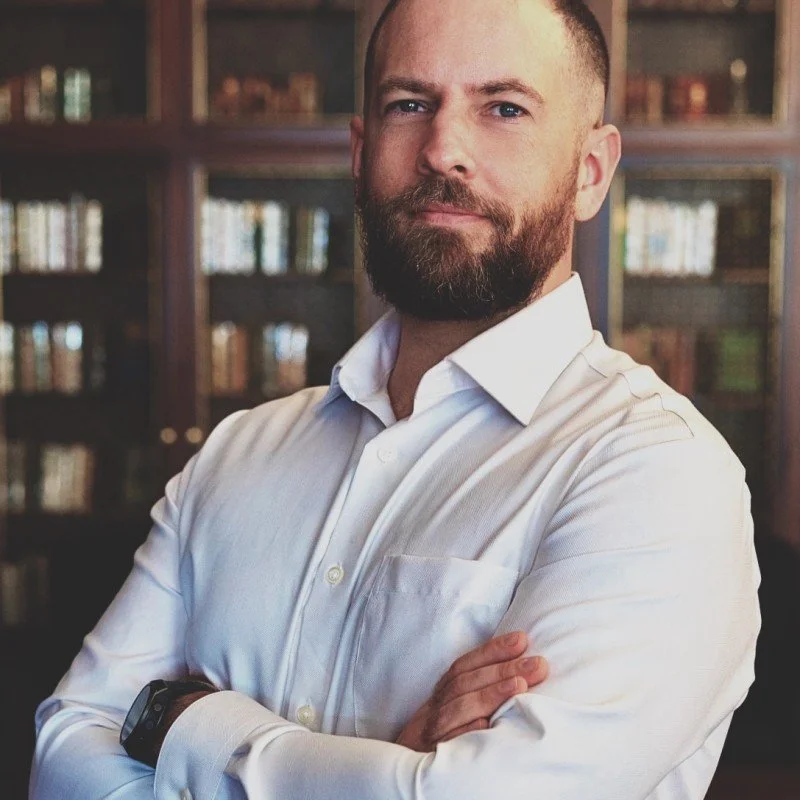
Hunter Moore is a Founder and the CTO for Hardshell
Measuring Data Exposure in Retrieval-Augmented AI Systems
Organizations across defense and government are connecting language models to internal document repositories. The security review for those systems typically covers the model and stops short of the retrieval layer and the knowledge base behind it, which is where the sensitive data actually sits.
This talk presents measured results from running published extraction attacks against a controlled RAG knowledge base seeded with tracked canary documents, then re-running those attacks against five published defenses to quantify what each one provides. Several widely deployed mitigations produce almost no measurable reduction in exposure. The defenses that do work impose costs on answer quality, and that tradeoff is the decision most programs have not yet made deliberately.
Attendees will leave with a method for assessing exposure in their own deployments, a comparison of current defenses measured against a common baseline, and specific questions to put to vendors claiming their products prevent data exfiltration.
-
Cory Everington, VP of Operations for DroneTrace
A Downed Drone Still Has a Story…
Most of that story is thrown away with the wreckage.
C-UAS investment has concentrated on one problem: defeating the system in the air.
Detect, track, identify, defeat.
That focus has produced real capability, particularly against one-way attack UxS in the CENTCOM and EUCOM AORs. But defeat ends the engagement. It doesn't end the mission.
Every downed or captured UxS carries data: flight logs, component sourcing, communications artifacts, media payloads. Left unexploited, that data disappears with the wreckage. Collected and analyzed, it maps the network behind the system — the supply chain, the operators, the tactics repeating across incidents.
This talk argues for extending the C-UAS cycle past defeat to include three additional steps: extract, analyze, disseminate. Drawing on patterns observed across recent CENTCOM and EUCOM engagements, I'll walk through what that extension looks like in practice: what data a downed system actually yields, how flight-pattern and supply-chain analysis turns individual incidents into network attribution, and where that intelligence needs to move to be useful at the tactical edge and beyond it.
-
Take time to network with speakers and attendees, and check out the booths at the event.
-
Steven Yates is the Founder and CEO of Federant
Governing Autonomous AI at the DDIL Edge: Who's Solving It, and Where the Data Lives
Edge and physical AI quietly assume that "mostly connected" means "mostly the same as always connected."
It does not.
When autonomous machines make consequential decisions in DDIL environments (denied, degraded, intermittent, and limited), the most important data is secure evidence of what the AI actually did while disconnected: what ran, what changed, who authorized it, and whether its actions were within operator-authorized bounds. In most deployments today, that data either does not exist, is not collected when the link is down, or sits in proprietary infrastructure the operator does not control.
This talk surveys the standards and open source efforts converging on the problem, including the new AI Deployment Software workstream at the Open Compute Project (which the speaker co-leads), adjacent projects across the Linux Foundation and IETF, and emerging defense and civilian regulations.
These efforts converge on the same missing layer, which is common infrastructure around the model that enforces operator policy at runtime, generates verifiable evidence of what the AI did, and makes autonomous AI deployable, observable, resilient, manageable, and secure. The goals are interoperability and true mission autonomy.
The speaker's Charlottesville-based company, Federant, is building this layer and testing it in live civilian deployments now.
-
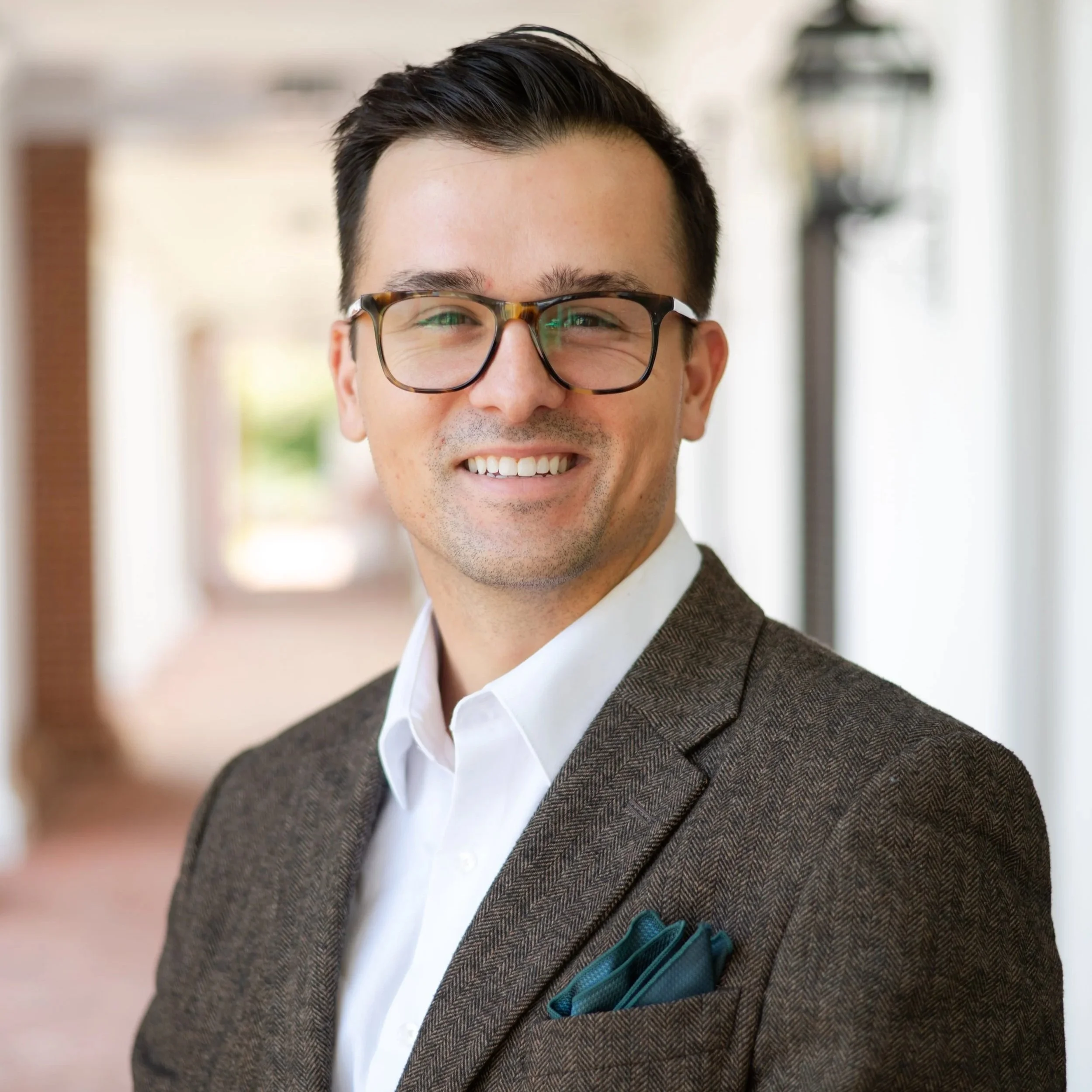
Michael Prichard is the Founder and CEO of Shift AI
The Warrior Developer: Empowering Mission-Driven Software Creation at the Edge of Need
The next asymmetric advantage in defense and intelligence won't come from a program of record — it will come from the analyst, the operator, or the logistics specialist who builds their own tool because they understand the problem better than anyone in a faraway acquisition office.
AI coding agents have fundamentally changed who can build software. Today, a non-engineer with domain expertise and the right platform can create production-grade internal applications in hours. The challenge for defense and intelligence organizations isn't capability — it's control. How do you empower your people to build without exposing classified data, violating security policy, or creating ungoverned shadow IT that becomes a liability?
This talk introduces the concept of the Warrior Developer — the mission-focused practitioner who can now build, test, and deploy operational software without a single line of hand-written code. Drawing on the commercial emergence of the "Citizen Developer" movement and the governance frameworks emerging to support it, we explore how defense organizations can apply these same patterns in a security-first context: connecting AI coding agents only to approved data sources, enforcing classification and policy boundaries at the platform level, and producing fully auditable, IT-sanctioned applications — all without requiring engineering expertise from the warfighter.
Attendees will leave with a framework for thinking about governed AI-assisted development inside classified and sensitive environments, and a view into the tooling being built today to make the Warrior Developer a safe and scalable reality.
-
Moderator: Andrew Schoka, CEO, Hardshell
Panelists:
- Hunter Moore, Hardshell
- Steve Yates, Federant
- Cory Everington, DroneTrace
- Michael Prichard, Shift AI
Agenda
-
![]()
Alan Johnson
VP, STRATEGIC DEVELOPMENT
GA-i3
Alan Johnson serves as Vice President of Strategic Development for GA-Intelligence, where he leads strategic growth initiatives across defense, intelligence, federal civilian, commercial and international markets.He works closely with government and industry partners to align customer mission requirements with GA-Intelligence's advanced capabilities in spatio-temporal analytics, artificial intelligence, machine learning, and multi-source/multi-INT data fusion; and with others within the GA&A family to develop and deliver solutions that leverage the breadth of GA capability.
Alan brings more than 35 years of experience spanning basic and applied research, software engineering, data science, engineering leadership, program management, and business development, working across multiple sectors including public accounting and insurance, environmental testing and consulting, chemical manufacturing, healthcare informatics, commercial real estate, and within the defense and intelligence industry, leading multidisciplinary teams in the development of enterprise business systems, laboratory information management systems, advanced medical devices, e-commerce platforms, and intelligence information systems.
Most recently he has focused on business development and strategic customer engagement within the defense and national security community, helping government organizations identify and adopt innovative technologies that address complex operational challenges while building long-term partnerships between industry and mission customers.
Master of Science, Physics, Clemson University
Bachelor of Science, Physics, College of Charleston
Bachelor of Arts, English, College of Charleston
Member of USGIF, AFCEA, NDIA. -
![]()
Hunter Moore
FOUNDER & CTO
Hardshell
Dr. Hunter Moore is the founder, CTO, and Chair of Hardshell. He holds a Ph.D. in Systems Engineering from the University of Virginia, with expertise spanning AI security, machine learning, and autonomous systems.He has over five years of experience advising the U.S. Department of Defense on AI security, including contributions to foundational policy and protocol development at the Joint AI Center and the Chief Digital and AI Office. His work has encompassed domains such as trustworthy and robust AI, generative AI, predictive and explanatory modeling, reinforcement learning, human systems, and systems engineering of autonomous systems. He has also served as Principal Investigator (PI) and Co-Principal Investigator (co-PI) on multiple successfully funded grants.
A published author and recognized contributor in AI security, Dr. Moore is a frequent presenter at leading forums such as the International System Dynamics Conference and TechNet Europe. He has taught AI-related courses for the U.S. Air Force, U.S. Army Special Operations Command (USASOC), and the University of Virginia, where he also designed and delivered a graduate-level AI security course and collaborates with the National Security Data and Policy Institute.
Dr. Moore is a Senior Member of IEEE and a member of INFORMS and AFCEA.
-
![]()
Cory Everington
VP, OPERATIONS
DroneTrace
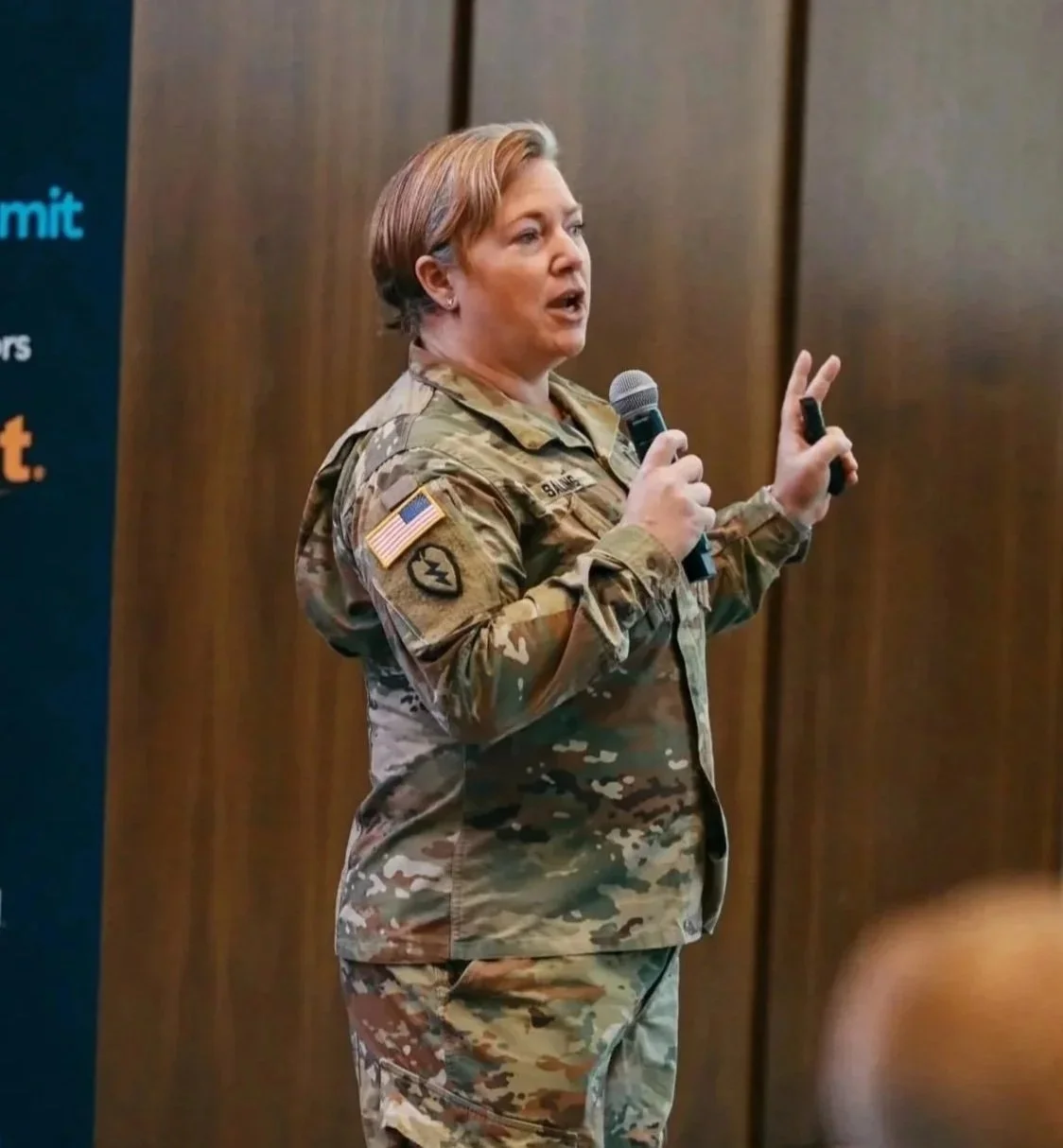
Cory Everington recently joined DroneTrace as Vice President, Operations, focused on delivering the company's tactical UxS exploitation capabilities to mission at scale for defense, intelligence, and law enforcement customers.She brings more than a decade of operational leadership and AI and data science expertise, most recently as head of CACI's DarkBlue Intelligence Group, where she directed dark web exploitation and analysis in support of national security and law enforcement missions.
Cory holds Master's degrees in Analytics from NC State University and Biology from the University of North Carolina at Wilmington.
-
![]()
Steven Yates
CO-FOUNDER & CEO
Federant
Steve Yates, P.E., is Co-Founder and CEO of Federant, a Charlottesville company building the operations and governance platform for autonomous AI in the field, with live deployments today in agriculture and remote site monitoring, physical security, and assurance.He co-leads the AI Deployment Software workstream at the Open Compute Project, writing open specifications for deploying, governing, and securing AI at the edge.
A licensed Professional Engineer and IEEE Senior Member with 38 years in embedded, industrial, and edge systems, he previously founded ADI Engineering, an edge networking OEM acquired by Silicom, and holds 20 awarded and pending US patents in edge AI, cybersecurity, and embedded systems. He recently wrote for NSPE's PE Magazine on the engineer's duty in the age of industrial AI.
-
![]()
Michael Prichard
FOUNDER & CEO
Shift AIMichael J. Prichard is a serial entrepreneur with over 25 years of experience building and scaling technology teams in software, mobile, and AI.
He is currently the Founder and CEO of Shift Engineering, creators of Greenlight, bridging the gap between Citizen Developers and the Enterprise. Prior to that, he founded WillowTree, which has evolved from one of the first mobile app developers into a leading global digital agency, subsequently acquired by TELUS for $1.23B in 2023.
Michael, who resides in Charlottesville, VA with his wife and 17-year-old son, is also an Air Force brat and a founder of VetScore, transforming how service members prepare for VA disability claims.
-
![]()
Andrew Schoka
FOUNDER & CEO
HardshellAndrew is a former U.S. Army Cyber Warfare Officer and the co-founder and CEO of Hardshell. He holds an MBA from the University of Virginia Darden School of Business, an M.S. in Cybersecurity from Georgia Tech, an M.E. in Systems Engineering from the University of Virginia, and a B.S. in Industrial and Systems Engineering from Virginia Tech.
Andrew’s military career includes a variety of cyber and special operations assignments with U.S. Cyber Command, the Cyber National Mission Force (CNMF), U.S. Army Cyber Command (ARCYBER), and U.S. Special Operations Command (USSOCOM). He has extensive experience in cyber operations supporting critical national and global events including the 2020 U.S. Presidential Election and the 2021 Russia-Ukraine crisis.
A published author in multiple military and cybersecurity venues, Andrew is a frequent speaker at industry conferences and regularly consults for cyber organizations across the U.S. government and private sector. He has previously guest lectured on cybersecurity and cyber operations at the University of Maryland, the University of Virginia, and the National Intelligence University.